Everyone loves their coffee- from Dunkin and Starbucks runs to expresso martinis, coffee is a deeply engrained staple of American culture. Yet behind the scenes coffee is an increasingly popular commodity, as it gains value around the world. Of the most commonly tracked commodities, coffee is one of the most impacted by specific weather events, due to the fact that it requires special weather conditions to grow. As a result, the price of coffee often has many ups and downs regardless of the economical situation at the time, unlike many other commodities that are heavily dependent on inflation and other economical factors.
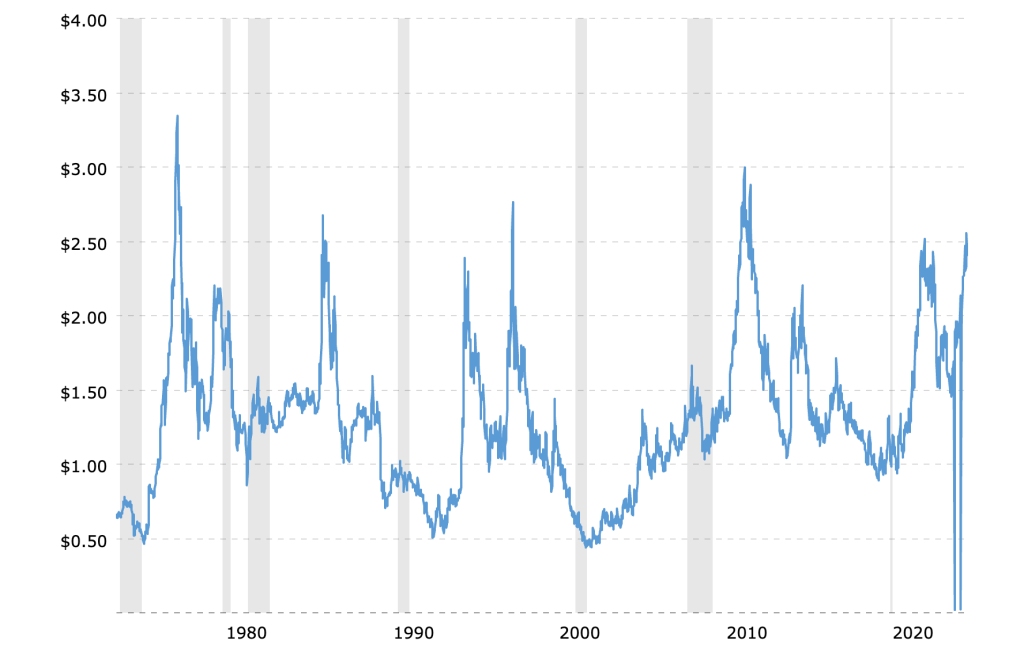
Coffee Prices from 1970-2024 (macrotrends.com)
In order to better understand these price peaks and declines, we isolated each time period, and researched the causes behind the sudden disruptions:
1970s-1980s (Price Peaks Around 1977)
Frosts in Brazil (1975 and 1977): Major frosts in Brazil, the largest coffee producer, destroyed large portions of the coffee crop, leading to significant price spikes. Supply disruptions were severe, and global coffee stocks were depleted.
1994-1997 (Price Peaks)
Brazil Frost (1994): Another severe frost hit Brazil in 1994, cutting the coffee output and causing prices to soar.
Low Global Coffee Stocks: After several years of strong consumption growth, global coffee inventories were relatively low during this period, leading to higher price sensitivity to supply shocks.
1999-2003 (Price Declines)
Overproduction: During this period, coffee-producing countries like Brazil and Vietnam increased their coffee production capacity, leading to oversupply. This caused coffee prices to crash to historic lows.
Expansion in Vietnam: Vietnam rapidly became one of the world’s largest coffee producers, contributing to an overabundance of coffee in global markets.
2008-2011 (Price Spike Around 2011)
Adverse Weather: During this period, droughts in Brazil and other key growing regions significantly reduced crop yields.
Speculative Activity: Increased speculative trading in commodity markets, alongside general price inflation across commodities post the 2008 financial crisis, contributed to the spike.
2016-2020 (Price Decline and Spike)
Brazil’s Record Harvests: Favorable weather conditions in Brazil led to record coffee harvests in 2016-2019, which flooded the market with supply, pushing prices down.
Pandemic Disruptions (2020): Coffee prices fluctuated during the COVID-19 pandemic, with initial price drops due to demand concerns followed by sharp rebounds as supply chains faced disruptions.
2021-2024 (Price Surge)
Frosts and Droughts in Brazil (2021): Severe frost and drought conditions again impacted Brazil’s coffee production in 2021, causing a major price spike. This echoes earlier trends when Brazil’s weather shocks drastically altered the supply-demand balance.
Supply Chain Disruptions: The ongoing effects of the COVID-19 pandemic on global logistics and transportation also played a role in tightening supply chains, further exacerbating price rises.
Through this we concluded that future coffee price movements will largely depend on weather conditions in Brazil, supply-demand balances, and macroeconomic factors such as currency fluctuations. By tracking these variables in real-time and employing predictive models, it is possible to anticipate future price trends more accurately.



 financewx.com
Leave a comment